Showing posts with label post-apocalyptic. Show all posts

Tuesday, January 21, 2020

Discover the world of Mike Chen in A Beginning at the End


Discover the new book by author Mike Chen in A Beginning at the End and get ready for an emotional ride.


Q&A with Mike Chen

Q: Parent characters are a large part of A Beginning at the End. Did you know your character's family backgrounds before you began? How do the characters take form in your writing process?
A: Somewhat. Usually the core problem comes first in my drafting process. I tend to write in layers and my initial drafts are always very light -- initial scenes may only be about ¼ of their final length because I don’t know the characters too well yet. At that stage, I’m trying to find the main conflict of the scene and the voice for their characters. I typically need 5-7 passes through a book to turn it from a 45k-50k word skeleton to a reasonably polished 90-100k word draft. During that time, the characters start to form.
As an example, my current work in progress (which will be released after 2021’s upcoming WE COULD BE HEROES), I’m on my third pass through for the first act and only now am I beginning to understand each character’s unique voice as well as their physical appearances. Core conflicts (such as character X has trouble with character Y) are established during the initial outline phase as part of the initial concept, but the how and why those conflicts happen (Is it family history? Is it a traumatic event? Is it sibling rivalry?), that takes a little longer to establish.
For the characters in A BEGINNING AT THE END, I started out immediately knowing what drove Krista and Rob. Moira didn’t really become fully three-dimensional until much later, and in fact in early revisions, she was just a minor supporting character. My agent noted that she was far too interesting to push to the side, so the book was rebuilt around her to hold equal footing to Rob and Krista.

Q: Where did you take inspiration for this pandemic? Do you have any other book or film recommendations?
A: Though it wasn’t a direct inspiration for this book, there’s a scene in the second season of The Walking Dead that began the train of thought for A BEGINNING AT THE END. It was the season on Hershel’s farm, and there’s a scene where Lori is trying to go over homework with her son Carl. A lot of viewers mocked the scene at the time with comments like “Why would you do math in the zombie apocalypse?” but I thought that was a smart bit of human grounding against a fantastical backdrop. Because those characters didn’t know if and when the apocalypse would end, and I think it makes sense that 1) a mom would try to keep some form of normalcy for her son 2) they wouldn’t just assume the world was completely over.
Because a lot of apocalyptic fiction focuses on either the event itself or a grimdark survival world, that scene sparked a lot of ideas for me -- what if society did crawl back from the brink, and instead of a true “end of the world” it was more like a big pause button? Then all these people would move past day-to-day survival and suddenly have a lot of trauma to unpack, and i hadn’t really seen that covered much at the time. That seemed really interesting to me, much more so than the idea of tribal factions attacking each other to survive.
Q: Which main character is your favorite? And which was the hardest to write?
A: It's been interesting seeing early reader feedback because the "favorite character" opinion has been pretty evenly split. I think that's a good sign that things are pretty balanced. For me personally, I always viewed Krista as the main character in this book and it was originally written with her to be the main focus (the original draft of this from 2011ish only had her POV and Rob's POV). She has such a snappy voice that it's just fun to write her responses and reactions to stuff, and a big challenge came from cutting out unnecessary dialogue that made it in there simply because she was so fun to write.
The hardest character to write was definitely Sunny. Simply because I needed to get into the head of a seven-year-old. Her POV was one of the last major structural changes my agent recommended before we sold this to my publisher and it was tricky my daughter was still very young at that point (she's still only five). I ran those chapters by my friends who had survived parenting those years for accuracy: complexity of thought, vocabulary, rhythm, etc.

Q: Your characters struggle with confronting their past while their future is so uncertain. What are some important lessons you've learned as a writer that you previously struggled with?
A: I think the keys to success as a writer are also keys to a happy and fulfilled life: don't give up and keep an open mind. Every writer I know that started around my time eventually broke through and got an agent by improving their craft through feedback and simply chipping away. If one book wasn't good enough, then it got shelved as a stepping stone and they marched forward. Doing that requires a certain amount of humility because it recognizes that you've got room to improve, and that improvement is going to come from listening to others rather than being defensive. Those are hard lessons to learn so I try to tell new writers that right away, so they understand the value of harsh-but-true constructive criticism from critique partners -- you'll never make it without that.

Q: What is a genre you don't think you'd ever write? A Beginning at the End and Here and Now and Then are both SF, do you think you would ever write something that's vastly different? What draws you to SF?
A: Writing character-driven stories in sci-fi settings comes pretty naturally to me, as it takes my favorite type of story (slice of life) and my favorite genre and brings them together. I'm fortunate that the market has turned around on that now to support books like mine. If I wrote something different, I imagine it would lean further in one direction or another -- either a contemporary drama or space opera. I am also a big fan of gothic horror, and I would love to try a haunted house story at some point.
As for what draws me to sci-fi, I can't put my finger on it but it's been really important to me my entire life. I grew up on Star Wars and Robotech as cornerstones of my media influences. At the same time, I've never really been too into fantasy despite them often being opposite sides of the same coin. My wife loves both sci-fi and fantasy, and there are things she loves that I just can't get into like The Elder Scrolls.

Q: What are some of your writing goals for the future?
A: Keep writing and not run out of ideas! In a perfect world, I'd love to be able to be a full-time author -- which is basically 50% writing and 50% the business of being an author. I don't think that's feasible since I live in Silicon Valley and need health insurance for a family situation, so I will likely always have one foot in corporate life unless the political landscape changes regarding medical care.
An obvious dream would be to have one of my books be adapted to a movie or TV series -- I'm of the mindset that HERE AND NOW AND THEM would work as a movie while A BEGINNING AT THE END has a deep enough world that it would work well as a TV series. I really want to try writing a video game, something like Telltale's games. And I would love to write for my favorite franchises: Star Wars, Star Trek, and Doctor Who. I've been pretty vocal about Clone Wars-era story ideas, and I'm friends with several authors on the Lucasfilm roster, so fingers crossed.

Q: If there was a global disaster in the future, what would your plan of action be?
A: Well, I have a bunch of animals and family health issues, so I'd say we'd be pretty screwed. I'm pretty organized and have a diplomatic approach, so hopefully that would earn me an in with some survivalists until society stabilizes.

Q: Both of your books, Here and Now and Then & A Beginning at the End, have a strong emotional foundation. Why did you choose that route?
A: It goes back to my favorite types of stories. To me, the emotional core is always the most important part of any story; it turns it from being surface level entertainment to something that resonates deeper.

Q: How has the success of your first novel affected your writing process for your second novel? Is there anything the first time around you did, that you didn’t do the second time?
A: I am lucky that A BEGINNING AT THE END was mostly finished when we sold it because it had been a project I'd shelved years ago but revised with my agent. I had a complete and fairly polished manuscript, and my editors revisions didn't affect much of the structure, they were mostly about tightening and adding more flashbacks, more world-building. So in that regard, that process was very similar to HERE AND NOW AND THEN.

However, having now experienced deadlines and commitments on top of a day job and parenting, the biggest change is that I draft by acts rather than the whole thing. For books 3 (WE COULD BE HEROES) and 4 (in WIP stages), I drafted a first act to get a sense of characters and world, then sent that to a few critique partners for their input before investing further energy into it. There's just no time. Also, I have to limit myself on reading for fun or video games because that time has to be used for writing and editing. Being published is a great privilege but its time demands do create numerous sacrifices.


Q: How do you balance being a reader and being a writer?
A: I use my phone a lot! I've discovered audiobooks, though my preferred method right now is ebooks through Google Play. Their app has a text-to-speech feature which, while nowhere near the quality of real audiobooks, allow me to listen while I'm commuting or doing dishes or whatever, but then also allow me to switch back to reading in the app when I want to. It's funny, I just don't read physical books that much now because my time is so compartmentalized that having it available on my phone is the best way to go.

The great irony about this is that as I've gotten to know more authors, agents, and editors, I'm often offered advance review copies by authors I really love and I simply have no time for them.


Q: What does literary success look like to you and with that definition in mind, are you successful?
A: This is tricky because I think all authors at all stages are looking up at someone and mentally comparing sales and awards. I know I'm doing better than some of my peers and worse than others, and one of the biggest lessons I've learned over the past year is that it is totally okay to be happy for someone while also jealous of their success. In fact, that is 100% normal.

With that in mind, I think success means that I'm selling enough copies to get the next contract and a chance to audition for licensed franchise work. Aspiring for bestseller status or awards is kind of silly because so many other factors go into that, many of which (marketing budgets, publicity selections) are simply out of your control. But if you keep producing at a high level of quality, I think you'll be able to gradually grow your readership with each book, and that's good enough for me.

Also, it's really cool to hear your book has touched a reader. That level of engagement is always a good measure of success.


Q: Finally, for you, what makes a book a good book?
A: I think the things that I always look for are interesting characters, emotional conflicts, and good prose. While I appreciate great action scenes or immense worldbuilding, I can often overlook those things if characters, emotions, and prose are all clicking. On the other hand, if I lose any of those main three, I'll often have to drop a book, even if, say, the worldbuilding is amazing.

Shameless shoutout to some friends: if you want impeccable examples of ALL of those (characters, emotions, prose, action, and worldbuilding), I suggest Fonda Lee's JADE CITY / JADE WAR and Kat Howard's AN UNKINDNESS OF MAGICIANS.


Mike Chen
On Sale Date: January 14, 2020
9780778309345, 0778309347
Hardcover
$26.99 USD, $33.50 CAD
Fiction / Science Fiction / Apocalyptic & Post-Apocalyptic
400 pages

Summary:
An emotional story about what happens after the end of the world, A BEGINNING AT THE END is a tale of four survivors trying to rebuild their personal lives after a literal apocalypse. For commercial readers who enjoy a speculative twist, or their sci-fi with a heavy dose of family and feelings.

Six years after a global pandemic, it turns out that the End of the World was more like a big pause. Coming out of quarantine, 2 billion unsure survivors split between self-governing big cities, hippie communes, and wasteland gangs. When the father of a presumed-dead pop star announces a global search for his daughter, four lives collide: Krista, a cynical event planner; Moira, the ex-pop star in hiding; Rob, a widowed single father; and Sunny, his seven-year-old daughter. As their lives begin to intertwine, reports of a new outbreak send the fragile society into a panic. And when the government enacts new rules in response to the threat, long-buried secrets surface, causing Sunny to run away seeking the truth behind her mother's death. Now, Krista, Rob, and Moira must finally confront the demons of their past in order to hit the road and reunite with Sunny -- before a coastal lockdown puts the world on pause again.


Buy Links:


Prologue
People were too scared for music tonight. Not that MoJo cared.
                Her handlers had broken the news about the low attendance nearly an hour ago with some explanation about how the recent flu epidemic and subsequent rioting and looting kept people at home. They’d served the news with high-end vodka, the good shit imported from Russia, conveniently hidden in a water bottle which she carried from the greenroom to the stage.
                “The show must go on,” her father proclaimed, like she was doing humanity a service by performing. She suspected his bravado actually stemmed from the fact that her sophomore album’s second single had stalled at number thirteen—a far cry from the lead single’s number-one debut or her four straight top-five hits off her first album. Either way, the audience, filled with beaming girls a few years younger than herself and their mothers, seemed to agree. Flu or no flu, some people still wanted their songs—or maybe they just wanted normalcy—so MoJo delivered, perfect note after perfect note, each in time to choreographed dance routines. She even gave her trademark smile.
The crowd screamed and sang along, waving their arms to the beat. Halfway through the second song, a peculiar vibe grabbed the audience. Usually, a handful of parents disappeared into their phones, especially as the flu scare had heightened over the past week. This time nearly every adult in the arena was looking at their phone. In the front row, MoJo saw lines of concern on each face.
Before the song even finished, some parents grabbed their children and left, pushing through the arena’s floor seats and funneling to the exit door.
MoJo pushed on, just like she’d always promised her dad. She practically heard his voice over the backup music blasting in her in-ear monitors. There is no sophomore slump. Smile! Between the second and third songs, she gave her customary “Thank you!” and fake talk about how great it was to be wherever they were. New York City, this time, at Madison Square Garden. A girl of nineteen embarking on a tour bigger, more ambitious than she could have ever dreamed and taking the pop world by storm, and yet, she knew nothing real about New York City. She’d never left her hotel room without chaperones and handlers. Not under her dad’s watch.
One long swig of vodka later, and a warmth rushed to her face, so much so that she wondered if it melted her face paint off. She looked off at the side stage, past the elaborate video set and cadre of backup dancers. But where was the gaffer? Why wasn’t anyone at the sound board? The fourth song had a violin section, yet the contracted violinist wasn’t in her spot.
Panic raced through MoJo’s veins, mental checklists of her marks, all trailed by echoes from her dad’s lectures about accountability. Her feet were planted exactly where they should be. Her poise, straight and high. Her last few notes, on key, and her words to the audience, cheerful. It couldn’t have been something she’d done, could it?
No. Not her fault this time. Someone else is facing Dad’s wrath tonight, she thought.
The next song’s opening electronic beats kicked in. Eyes closed, head tilted back, and arms up, her voice pushed out the song’s highest note, despite the fuzziness of the vodka making the vibrato a little harder to sustain. For a few seconds, nothing existed except the sound of her voice and the music behind it— no handlers, no tour, no audience, no record company, no father telling her the next way she’d earn the family fortune—and it almost made the whole thing worth it.
Her eyes opened, body coiled for the middle-eight’s dance routine, but the brightness of the house lights threw her off the beat. The drummer and keyboard player stopped, though the prerecorded backing track continued for a few more seconds before leaving an echo chamber.
No applause. No eyes looked MoJo’s way. Only random yelling and an undecipherable buzz saw of backstage clamor from her in-ear monitors. She stood, frozen, unable to tell if this was from laced vodka or if it was actually unfolding: people—adults and children, parents and daughters— scrambling to the exits, climbing over chairs and tripping on stairs, ushers pushing back at the masses before some turned and ran as well.
Someone grabbed her shoulder and jerked back hard. “We have to go,” said the voice behind her.
“What’s going on?” she asked, allowing the hands to push her toward the stage exit. Steven, her huge forty-something bodyguard, took her by the arm and helped her down the short staircase to the backstage area.
“The flu’s spread,” he said. “A government quarantine. There’s some sort of lockdown on travel. The busing starts tonight. First come, first serve. I think everyone’s trying to get home or get there. I can’t reach your father. Cell phones are jammed up.”
They worked their way through the concrete hallways and industrial lighting of the backstage area, people crossing in a mad scramble left and right. MoJo clutched onto her bottle of vodka, both hands to her chest as Steven ushered her onward. People collapsed in front of her, crying, tripping on their own anxieties, and Steven shoved her around them, apologizing all the way. Something draped over her shoulders, and it took her a moment to realize that he’d put a thick parka around her. She chuckled at the thought of her sparkly halter top and leather pants wrapped in a down parka that smelled like BO, but Steven kept pushing her forward, forward, forward until they hit a set of double doors.
The doors flew open, but rather than the arena’s quiet loading area from a few hours ago, MoJo saw a thick wall of people: all ages and all colors in a current of movement, pushing back and forth. “I’ve got your dad on the line,” Steven yelled over the din, “His car is that way. He wants to get to the airport now. Same thing’s happening back home.” His arm stretched out over her head. “That way! Go!”
They moved as a pair, Steven yelling “excuse me” over and over until the crowd became too dense to overcome. In front of her, a woman with wisps of gray woven into black hair trembled on her knees. Even with the racket around them, MoJo heard her cry. “This is the end. This is the end.”
The end.
People had been making cracks about the End of the World since the flu changed from online rumors to this big thing that everyone talked about all the time. But she’d always figured the “end” meant a giant pit opening, Satan ushering everyone down a staircase to Hell. Not stuck outside Madison Square Garden.
“Hey,” Steven yelled, arms spread out to clear a path through the traffic jam of bodies. “This way!”
MoJo looked at the sobbing woman in front of her, then at Steven. Somewhere further down the road, her father sat in a car and waited. She could feel his pull, an invisible tether that never let her get too far away.
“The end, the end,” the sobbing woman repeated, pausing MoJo in her tracks. But where to go? Every direction just pointed at more chaos, people scrambling with a panic that had overtaken everyone in the loading dock, possibly the neighborhood, possibly all New York City, possibly even the world. And it wasn’t just about a flu.
It was everything.
But… maybe that was good?
No more tours. No more studio sessions. No more threats about financial security, no more lawyer meetings, no more searches through her luggage. No more worrying about hitting every mark. In the studio. Onstage.
In life.
All of that was done.
The very thought caused MoJo to smirk.
If this was the end, then she was going out on her own terms.
“Steven!” she yelled. He turned and met her gaze.
She twisted the cap off the water-turned-vodka bottle, then took most of it down in one long gulp. She poured the remainder on her face paint, a star around her left eye, then wiped it off with her sleeve. The empty bottle flew through the air, probably hitting some poor bloke in the head.
“Tell my dad,” she said, trying extra hard to pronounce the words with the clear British diction she was raised with, “to go fuck himself.”
For an instant, she caught Steven’s widemouthed look, a mix of fear and confusion and disappointment on his face, as though her words crushed his worldview more than the madness around them. But MoJo wouldn’t let herself revel in her first, possibly only victory over her father; she ducked and turned quickly, parka pulled over her head, crushing the product-molded spikes in her hair.
Each step pushing forward, shoulders and arms bumping into her as her eyes locked onto the ground, one step at a time. Left, right, left, then right, all as fast as she could go, screams and car horns and smashing glass building in a wave of desperation around her.
Maybe it was the end. But even though her head was down, she walked with dignity for the first time in years, perhaps ever.

Excerpted from A Beginning at the End by Mike Chen, Copyright © 2020 by Mike Chen. Published by MIRA Books. 


Author Bio:

Mike Chen is a lifelong writer, from crafting fan fiction as a child to somehow getting paid for words as an adult. He has contributed to major geek websites (The Mary Sue, The Portalist, Tor) and covered the NHL for mainstream media outlets. A member of SFWA and Codex Writers, Mike lives in the Bay Area, where he can be found playing video games and watching Doctor Who with his wife, daughter, and rescue animals. Follow him on Twitter and Instagram: @mikechenwriter

Social Links:
Twitter: @mikechenwriter
Instagram: @mikechenwriter
Facebook: @mikechenwriter


Monday, March 4, 2019

Book Spotlight & Giveaway~ Frost


Title: Frost
Author: Isabelle Adler
Publisher: NineStar Press
Release Date: March 4, 2019
Heat Level: 3 - Some Sex
Pairing: Male/Male
Length: 27100
Genre: Science Fiction, LGBT, contemporary, post-apocalyptic, action

Add to Goodreads

Synopsis

The end of the world as they knew it had come and gone, and the remnants of mankind struggle to survive in a barren landscape. Twenty-three-year-old Finn sets out on a desperate mission to scavenge for the much-needed medicine to help his sister. He knows better than to trust anyone, but when a total stranger saves him from a vicious gang, the unexpected act of kindness rekindles Finn’s lost faith in humanity. The tentative friendship with his rescuer, Spencer, gradually turns into something more, and for the first time in years, Finn lets himself yearn for joy and hope in the dead of nuclear winter—right until Spencer goes missing. They say love is the greatest power of all, but it seems it would take nothing short of a miracle to overcome the dangers that threaten to destroy Finn’s only chance for happiness and the lives of his loved ones.

Excerpt

Frost Isabelle Adler © 2019 All Rights Reserved The hospital was huge, which was both a curse and a blessing. It meant Finn had more ground to cover. But it also meant there was a bigger chance of finding anything left after the building had been raided repeatedly for drugs and equipment. The emergency generators had long gone dead, of course. The permeating chill made refrigeration redundant, and the fact that none of it worked hardly affected the leftover medications. However, the permanent gloom made the search difficult, and Finn had to waste more batteries for the flashlight, which produced a feeble, creepy glow. He walked down the dusty corridor, making sure to read the plaques next to the doors and entryways carefully. There, behind the next nurses’ station, was another storage room with rows upon rows of drawers with faded labels. It had clearly been looted at some point in the past—probably more than once. Most of the drawers were upturned and scattered on the floor, devoid of contents. A thick layer of dust and shattered glass from the cupboard doors covered everything, and gossamer cobwebs spanned the far corners of the room and the bare shelves. Finn stepped inside, examining the labels by the light of his flashlight. Two years ago, he’d pilfered a few medical books from a deserted doctor’s office and had studied them religiously, so he had some basic understanding of what he needed. General stuff like analgesics were great too, but those were increasingly hard to find—not to mention the majority of the stuff he managed to score was long expired. As he’d learned from experience, the meds could still be used after their nominal expiration date, if he was careful. What would happen in a few more years was a different question, but the impetus for immediate survival rendered these questions moot. If he couldn’t scavenge what was necessary now, there might not be a future to think about. As he’d feared, the storage room was completely ransacked. All he could find were some empty pillboxes and a few rolls of gauze that had fallen behind one of the cupboards. Finn stuffed them in his cross-body messenger bag. These always came in handy, especially the ones that were still in their sterile plastic wrappers. As there was nothing else to be salvaged from the room, Finn continued on to the patient ward. The hospital rooms weren’t always as thoroughly searched as places designated for storage, and that meant there were still some things to be found there—personal items, medical supplies, and the occasional blister pack left behind by the bygone patients. Even things like shampoo and tubes of hand cream were useful, but he hoped to come across something more substantial. Siobhan had been unwell these past two weeks, and that was the only reason he risked venturing out into the heart of the city where there’d been sightings of feral gangs. Nothing she’d taken so far had had any positive effect. He had to find something to make her better, to take away the awful coughing she’d been suffering from, or at least to alleviate her pain. Their own little stash of supplies had greatly diminished (they were out of Robitussin and down to their last box of ciprofloxacin), and he had to replenish that somehow before she took a turn for the worse. The beam from his flashlight picked up upturned beds and smashed monitors. The mattresses were gone, but the utilitarian white nightstands were still there, and Finn rummaged through them, despite the sharp smell of urine and mold that seemed to have seeped into the walls. He stuffed all he could find into his bag—bottles of antiseptics, plastic tubing, boxes of Band-Aids—deciding to sort through his loot later, when he didn’t have to conserve battery life. He recoiled as a swarm of cockroaches scampered from a lower drawer he’d opened without thinking. Must have been true what they said about the nasty buggers surviving a nuclear holocaust. The cockroaches and other critters certainly seemed to thrive where mammals were now failing. Finn shook his head ruefully at the thought and continued with his methodical search. The window was tightly shuttered, but he could still hear the distant howling of the wind outside. The weather had grown progressively worse ever since he’d left home. He should probably head back before the storm hit or he’d be stranded here for God knew how long. Just a few more rooms, to make sure he hadn’t missed out on anything important. As he straightened his bag and left the room, the sound of footsteps echoed somewhere farther down the hall. A few sets of them. Finn froze. It was never a good sign. Abandoned hospitals and stores usually attracted marauders and other sorts of people he had no desire to meet with. He turned off his flashlight and edged down the corridor, away from the noise, keeping to the deeper shadows, but the footsteps were fast approaching. He ducked into the closest room, careful not to make any creaking sounds, and peered out cautiously, concealed by the partly closed door. Three bulky silhouettes drew nearer. Geared up as they were, carrying large bags and wearing several layers of outerwear, it was hard to make out details since their lights were facing him. After a short muffled conversation, they split, going down the length of the corridor in both directions, entering and checking rooms, apparently with the same idea as Finn regarding potential pickings. Finn cursed internally. Judging by the looks of their bags, there probably wouldn’t be anything left after they were done even if he managed to slip out unnoticed and come back again later, and there hadn’t been much to begin with. At any rate, this was definitely his cue to leave. He waited until all the looters were busy searching the rooms and tiptoed down the corridor as quietly and as fast as he could, looking for the emergency exit at the end of it. The heavy metal door was there, beneath the smashed EXIT sign, but when he tried the handle, it clicked dryly and didn’t open. Finn cringed at the sound that was far too loud for such an empty hallway. Shit, shit, shit. He only hoped the others were too absorbed in their rummaging and making too much noise themselves to notice it. He tried pushing the door open with his shoulder, but it didn’t budge. Maybe there was something obstructing it from the other side. After a few tries, he left the door alone and crept to the window in hopes of finding it open. The snow-covered rails of a fire escape were visible through the patterns of frost on the windowpane—a tantalizing view of a retreat route. When he tried the opening mechanism, though, it didn’t even click. It was either frozen solid or corroded into place. Possibly both. Oh, fuck. Finn looked around desperately, but there was no other way out that he could see. He couldn’t really hide in one of the rooms for fear of being discovered, so his only hope was to make his way back while the looters were still inside the rooms. It would be incredibly risky, but he had no other choice. He didn’t know who they were, and he preferred not to find out. He kept to the wall as he hurried along the darkened hallway back toward the nurses’ station. It might have worked out if by some shitty luck the looters’ search of the next room wasn’t shorter than the previous ones. “Nothing here at all,” said an annoyed voice, and then two of the three men shuffled out of the room. One of them pushed a dilapidated bed aside with a loud scrape, which diverted his attention, but the other chanced to look straight at Finn and stopped in his tracks. “Hey!” The guy said, blinding him with the ray of his flashlight. Finn threw his arm up to shield his eyes from the light. There wasn’t anywhere to hide, but he took advantage of their momentary surprise and bolted down the hall that led toward the ER entrance. “Hey, you!” the same guy repeated, none too eloquently, and ran after him, joined by his two comrades. The beams of their flashlights picked random patches along the hallway ahead, dancing jerkily, but it was hardly enough to make out the way clearly. As he rounded a corner, Finn bumped into a gurney, sending it rolling on squeaking wheels and losing his footing with the impact. He went down hard, hitting his knee on the floor that was luckily clear of broken glass and other debris. Finn hissed in pain and frustration and scrambled back to his feet, but he’d already lost precious seconds. The foremost of his pursuers grabbed Finn by the strap of his bag before he could take another step, pulling him roughly backward to face them. Finn squinted, blinded by the glaring light. “What d’you have here?” “Nothing. Let me go!” Finn tried to tear away from him, his heart pounding. That was one unfortunate turn of events, to put it mildly. With three against one, he had no real chance of fighting them off, even if they were unarmed, which he bet they weren’t. If he was lucky, they might take his stuff and let him go. If he wasn’t…

Purchase

NineStar Press | Amazon | Smashwords | Barnes & Noble | Kobo

Meet the Author

A voracious reader from the age of five, Isabelle Adler has always dreamed of one day putting her own stories into writing. She loves traveling, art, and science, and finds inspiration in all of these. Her favorite genres include sci-fi, fantasy, and historical adventure. She also firmly believes in the unlimited powers of imagination and caffeine.

Website | Twitter

Giveaway

a Rafflecopter giveaway

Blog Button 2

Wednesday, January 23, 2019

Book Review- Fury's Mantle by Yasmine Galenorn

Eight long years have passed as Fury, Tam and the rest of their friends and allies recover from the second world shift. It's an edge of the seat ride from start to finish!

My Rating for Fury's Mantle: 5 Stars and a Series Recommended Read

Find Fury Unbound series at Author's Website


It’s been eight long years since the second world shift and as Tam, Fury and their friends and allies recover and grow, civilization as they knew is no over and they have tried to move on, to recover from all the changes that have happened. But as they settle in this new life they made, a danger grows in the distance.

Lycanthropes are attacking under a strange banner and rumors are circulating about an old god returning to earth. Whomever this god is, danger grows, and deaths are coming fast and furious. For Fury, Tam and all their family and friends, this danger scares them to death and Hecate warns Fury that if we can’t stop them, all we have built in UnderBarrow and Willow Wood will be decimated forever.

Wow is all I can say after finishing FURY’S MANTLE and I can honestly say hold on to your hats, ladies and gents, its about to get bumpy. Ms. Galenorn delivers another wonderful heart pounding installment in the Fury Unbound series and it is one that has twists and turns around every corner. An old god has returned to earth and in its wake danger and chaos comes. Lycanthorps are massing under this god and deaths follow as they move toward Willow Wood and the UnderBarrow. I was glued to the pages of FURY’S MANTLE to the very end and I can say this has got to be one of the best books so far in this series and that isn’t because the first four are not as good. Nope, this takes Fury and the gang on a new adventure, one filled with uncertainty, danger and death every time they turn around. This is an author who just takes Fury on a wild ride right off the bat and in the end, the reader is left hanging on for dear life. I loved every minute of Fury’s adventure and loved at how much she has grown since book four, Fury Calling.

FURY’S MANTLE gives the reader a glimpse into the world Fury and Tam have created in the last eight years since the second world shift. Some of the gods stayed with humanity and began to build up their temples again, survivors tried to live and grow in a world they no longer recognize, and Fury became a Queen of the UnderBarrow as well as beloved to the goddess, Hecate. Life moves on and as Fury grapples with all the changes that have happened, danger mounts and it scares her spitless. I love, love, love Fury. Her growth is tremendous in a sense she is finally at peace with her marriage to Tam and being a queen. She is also feeling pent up as she hasn’t done much work for her goddess, Hecate, the last several years. But times are changing, and Fury learns to adapt and roll with the punches. I love how much all of my favorite characters have grown since the last book, Fury, Tam, Jason, Elan and more all have grown even as they loved and moved on as best, they can. The characters are vibrant, alive and just so entertaining. This is an author who knows how to create characters that fairly brim with life and jump off the pages and into your living room. Even the gods play a major part in this series and all are just as unique and enjoyable as the main characters.

FURY’S MANTLE kicks off a new story ARC in this world and its one I am chomping at the bit to read more of. The ending of the FURY’S MANTLE is a little bit sad, a lot happy and there is a few twists that I sure didn’t see coming. I can’t wait to see where Ms. Galenorn goes next in Fury’s world and I am eager to see if Fury will take up arms yet again next to her goddess, Hecate. If you enjoy a character driven series that just sucks you in and keeps you up for hours to see what happens next, then I urge you to grab this series. You can start from book five, FURY’S MANTLE, but I strongly urge you to start from the beginning in order to see how Fury got to where she is in this latest book. You won’t be disappointed.

This is an objective review and not an endorsement

Series Reading Order:


Book 1:Fury Rising


Book 2: Fury's Magic


Book 3: Fury Awakened


Book 4: Fury Calling


Book 5: Fury's Mantle

Tuesday, November 6, 2018

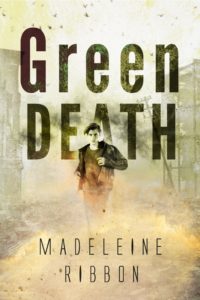
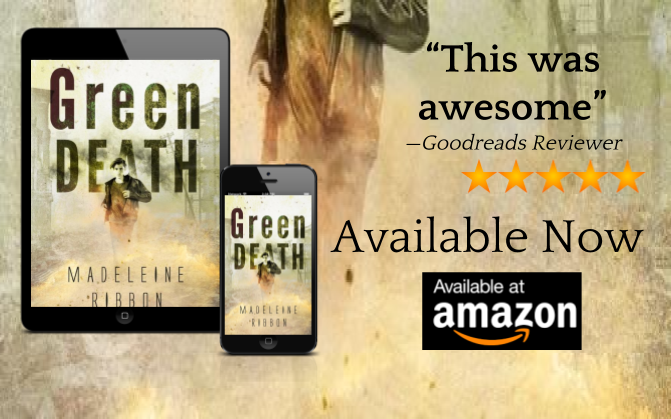
Book Spotlight~ Green Death


Title: Green Death
Author: Madeleine Ribbon
Publisher: Self-Published
Release Date: November 2nd
Heat Level: 3 - Some Sex
Pairing: Male/Male
Length: 100,000 words
Genre: Romance, Science Fiction, Dystopian/post apocalyptic

Add to Goodreads

Synopsis


As poisonmaster to the Oligarch, Tryg Sant knows a lot of things others shouldn’t. But when he discovers his family’s darkest secret, his brother tries to kill him.

When Tryg’s lover pushes him out of a helicopter and into the poison-filled Exclusion Zone, Tryg finds himself trapped in a dangerous new world, entirely different from the one he expects. Now, Tryg has to learn to survive nearly-feral humans and his own disintegrating mind. Luckily, he’s found an ally in Riot, one of the victims of the Green Death…

Excerpt


Everything felt muffled. My injuries, my emotions, my thoughts, the sounds from outside. The heavy, rhythmic, mechanical thumps from somewhere above me were so loud they radiated through my chest. My mind barely registered the noise, even if my sternum did—maybe because there was something strapped over my head, digging into the top of my skull and trapping warm, sweaty air over my ears.

All I cared about, in the moment, was that I wasn’t being hit.

The ground shifted under me, tilting just slightly, shooting my equilibrium all to hell. The only things that kept me from toppling over were a wall on my left, propping me upright, and straps across my shoulders and chest and hips. They dug into my bruises with a steady, fuzzy, ache.

I tried to tug at the straps, hoping to release the pressure, but my arm didn’t work right.
I should have hurt a lot more. I was pretty damned sure I ought to be screaming from just trying to move my arm, but all I felt was thick haze and a low heat over almost every inch of my skin.

“Tryg, wake up.” The headpiece I wore transmitted the words directly into my ears, but even with the amplification, I could barely hear it over the whump whump whump coming from overhead.
I opened my eyes. Well, my left eye, since the right lid didn’t seem to work.

I tried looking around, but my neck didn’t want to move either. So far, the only thing responding to me was a single eyelid.

Someone had given me something—a drug or a poison of some sort. That was the only reason I wasn’t writhing on the ground, screaming. I could feel my injuries, the places my brother had cracked bones or ripped into my skin with his obnoxiously large ring, but only a little. Like a wad of cloth had been shoved somewhere between the injuries and my brain, so the signals from my nerves couldn’t make it through at full strength.

I tried to focus, tried to direct my wandering mind to the list of substances Vodayn had requested from me over the last ten years I’d run the laboratory.

Nothing. Probably just strong painkillers, unless he had outside sources for a new poison.

Outside sources. My blood ran cold. Is that what Arris had been talking about, when I overheard them a few days ago? This pricked at my pride. For a moment, it didn’t matter that my brother had starved and kicked the shit out of me and was sending me to my death. I was angry at him for going elsewhere for poisons when I could make him almost anything he wanted, a hundred times better and far more discreetly than anyone else.

But I’m not his poison master anymore. The thought came crashing down around me, heavy on my shoulders. I slumped forward, though the straps kept me from folding in half.

And then realization struck me, harder than any of my brother’s blows had.

He’d always planned on getting rid of me. Even before I’d found the damning documents. If he was looking elsewhere for poisons, he’d been looking for a replacement. That’d been what Arris’s comment to him had been about.

“Come on, Tryg. I hate that I have to do this job, but it’s a damned good thing for you. Anyone else would have just pushed you out by now. I want you to be functional.”

Arris. My whole body started to shake. Arris was here. He’d save me. He’d make sure I was okay. He cared about me, as much as anyone ever had. More than anyone, since Dad died.

I finally managed to twist my neck a few inches. Arris’s scarred, tanned face slowly resolved before me, headset obscuring his short black hair.

He was frowning just a little. It was the most emotion I’d seen on him, outside of sex.

“There we go. Welcome back.” He leaned forward and brushed his thumb over my cheek. Searing fire ran though my face. I hissed and tried to jerk back, but most of my body still didn’t want to obey my directives.

“You… Why?”

My words slurred. Apparently my lips worked fine, though my tongue was taking its sweet time catching up. I hoped the drug didn’t wear off too soon. I wasn’t prepared to face the damage done to my body. Not until I knew what in the dark depths of hell Arris was planning.

Arris watched me with soft eyes. He never had soft eyes. Passionate while we were fucking? Yes. Inquisitive? Rarely. Ice cold when in his official capacity? Always. But never soft.

“This is occurring because Vodayn demanded that you die. Telling him what you found was a stupid move. The stupidest. He’s been increasingly paranoid over the last year. Surely you haven’t missed that, as smart as you are?”

“Paaa…noy?” My half-numb tongue fumbled over the word. I shook my head. I hadn’t had time to notice anything.

For the last year, Vodayn’s requests of me had gone down, yes, but when he did give me a project, he had been making obscure and incredibly difficult demands I’d worked hard to fulfill. A substance that, once ingested, made hair change color permanently, with no other effect. One that made the victim cry irrationally for days. One that mimicked a heart attack’s symptoms perfectly. I’d succeeded in crafting them all, though the crying draught lasted for only thirty-six hours.

I’d been proud of my success. I’d managed everything he asked.

Arris hummed a little. “Very paranoid. You always were a bit too focused when you were working.”

“How’djou know?”

The lines between his brows grew deeper. “Know what?”

“What I told him.” Words were slowly becoming easier to pronounce.

“Because I was there when he received your report. I only got a glimpse of it while he read it, but I know what it means. We suspected that the Sants had been behind the poisoning ever since it happened. There’s a reason I was stationed in the household, and my father before me. I was supposed to find proof. And you hand-delivered it to him.”

The words Arris spoke now did not match up with what I’d known of him over the last few years. My heart seemed to think that now was a great time to start thundering as fast as it would go. “Who’s we?”

“The resistance.” Here, Arris smiled, and the deepest scar, the one that ran over his cheek, pulled and wrinkled in a dozen places.

He’d been my brother’s right-hand man and main assassin for almost three years, and never once had I seen him smile. It scared me more than anything else. I wonder if all his victims got to see this horrible, wonderful expression.

Because that’s what I would be. His victim. He was letting me see another side to him, now, and that meant I was a dead man.

And then the meaning of his statement filtered into my mind. The resistance. That’d been wiped out with the bombing, hadn’t it? Or tainted with the poison, at least, and driven crazy?

“The resistance survives? Truly?”

He nodded. “We have been trying to find justice for almost a hundred years. The exclusion zone is still the center of it. Most of us had family there, when it was poisoned. My great-grandfather’s entire family got walled inside, except for him. He’d been at a friend’s for a sleepover during the bombing.”

“I’m sorry,” I said. “Did any of them… survive?”

“A few, for a while.” He looked away from me, and then his face tightened, the smile vanishing. “We’re almost there. You’re getting dropped in. I pushed for this, instead of using the Black Daydream on you until you were crazy enough to cut your own throat. Vodayn wanted you to die in agony, and I argued this would be the most effective and ironic way. He came around to my line of thinking eventually.”

“Where? Dropped in where?”

He reached past me and tapped on the surface to my right.

I turned my head, my neck still protesting the motion. I suspected that without the painkillers I’d been given, the movement would hurt a lot more.

A window. And beyond it, the sky. Clouds. We were high. I’d never been so high. I never had permission to leave the Sant compound, much less go somewhere that required air transport.

Then again, if all air transport was like this strange, rusted, rickety, noisy vehicle, I doubted I’d missed much.
Arris leaned forward. “You’re wearing a parachute. Do you think you can pull the ripcord yourself once you’re out?”

My heart clenched. I tried to flex my hand, and then lift it. All I managed was a finger-twitch. “I don’t think so.”
“The drug?”

“Yeah. What is it?”

“Just a mid-level painkiller from Professor Marita’s lab.”

“Oh.” Marita—there was that name again. Professional jealousy twisted through me. “Thanks.”

“I’ll pull your ripcord for you when you jump, if you’re not up to it now. We’ll be so low nobody will notice the parachute, thanks to the poison.”

“The—oh green-damned hell, the poison.” Arris’s statements finally sank into me. He’d asked my brother to dump me into the exclusion zone. And my brother had agreed, even before he’d started to beat me senseless.
“Here. Hang on to the handles if you can.” He lifted my arms up, his grip gentle, and hooked my hands over smooth, cool plastic. “This will steer you once you’re in the air, if you can find the strength. Pull which way you want to go. Try and land in a flat place, but close to the taller buildings. You won’t be able to get out of the exclusion zone and go back to regular life, but you’ll have a good chance to survive down there if the right people find you. I’ve already put out an alert. I can only hope you make it, Tryg. I don’t want you to die. You’ve been the closest thing to a friend I had in that mansion. Please believe that.”

Arris looked so damned serious, giving me my death sentence with such care. I knew I wouldn’t last. I wasn’t a fighter—not without my poisons, anyway.

“Don’t pull the chute,” I said, holding his gaze. “Let me fall. It’s kinder.”

Arris shook his head. “I can’t, even if I agreed with you. You have to live. You’re our best hope now. I didn’t want to do this to you, but it’s the only way for Vodayn to leave you in peace.”

A blast of static filled the compartment, and Arris scowled and leaned back. He tilted his head. Whatever he listened to, it didn’t repeat in my headset. I tried moving my neck again, and this time I was able to turn maybe an inch farther to the right. More glass and sky.

The transport vehicle had to be well over three hundred years old, if it still had glass windows and rotors that made this much noise. The Eastrend military forces had used these to monitor the huge political protests, way back before the Green Death happened. They’d been passed on to other government agencies, like the one that monitored the poison levels here. Nobody would think this air transport looked out of place. At least not until I got pushed out of it. And Arris seemed to have already thought of that.

I pressed against the window and looked down. The only thing below us was a foggy haze, the green color lurid against the gray of the surrounding city. It was the hue present on some of the creatures in the Menagerie, almost acid-bright.

We were over the exclusion zone. A dozen small drones in a variety of styles hung just over the fog, film crews focusing on the action down below. There had to be another riot, if so many drones were out here. I hated watching the news on the nights they focused on Greenies fighting, but the rest of Eastrend seemed to love eagerly watching the violence, treated like war footage from somewhere unreachable.

All around the green air, a tall wall—bleak and gray and three city blocks thick at its narrowest point—rose a hundred feet higher than the fog, trapping the Green Death into what had once been a hotbed of political resistance. The place where Arris’s family had once lived.

I looked away. Seeing the exclusion zone—really seeing it, not just on a documentary or the news—made me want to scream. My great-grandfather had singlehandedly caused it. All the pain and agony, all the rage, all the violence—he’d created the chemical that caused it. And I might have, in another life, been able to create a way to neutralize it.

Not anymore.

“I truly am sorry, Tryg. You’ve been the only reason I still have my sanity, working for Vodayn.” Arris tilted his head, gaze sharpening, and then turned to the window next to me. “The fighting has died down. The drones are moving out. Three minutes and we start moving too.”

“Won’t the drones catch me getting pushed in?” I stared up at Arris. My lower lip wobbled in an embarrassing fashion, and I dropped my gaze. I was twenty. I didn’t need to cry. Especially not in front of him.

“The drones will be over the wall by then. Any remaining behind will already have their cameras off or pointed away. The fight’s over. They have their news clips for the day. If Vodayn tells them not to talk about it, they won’t. But if an unregulated source does draw attention to your drop-in, the story is that you’re a researcher sacrificing yourself for data on the Green Death and what it’s doing to the environment. It wouldn’t be the first time an idiot has gone in willingly and can’t get permission to go through the wall. Researchers never get permission.”

“Oh.” I shuddered. Vodayn was probably the reason for the research block. The darkness of our family secrets bled into so many other people’s lives.

Arris frowned, and then he dug something out of his belt. He held up a small, black handgun, the kind that shot little bursts of plasma—the same weapon he’d dug into my back days ago, when arresting me in the lab.

“It’s fully charged, but the safety is on. Red’s dead.” He flicked the little lever back and forth, showing me a red dot beneath it. “Only use it if you absolutely have to. The sound will call all the wild ones to you if you don’t watch out.”

“Wild?”

“They’re the most violent Greenies. They have no tattoos on their faces,” he said. “I’m tucking the gun in your back pocket. I really do want you to survive. I know you haven’t fired one often, but you’re smart. You’ll figure it out. I’ll do my best to check in on you when the Oligarch isn’t watching my every move again, okay?”
He kissed me, bruising, no more than a clash of teeth and lips.

That, more than anything, broke me. We’d never been kissers. I didn’t mind the denial, despite desperately wanting to feel what a kiss was like, mostly because I’d never imagined him being the kissing type. And now, when my banishment and potential execution was so near? Now he gave me what I wanted for so damned long.

When he pulled away, his face was a blank slate, and the chill in his gaze reappeared.

I repressed the urge to scream, to grab at him, to beg to stay in the transport. He might have been my lover, but right now, he was my brother’s top assassin.

These well-wishes and the gun would be the best I’d get from him.

“It’s time” he said as he shoved the gun into the back pocket of the torn, filthy protective work pants I still wore. “There. Brace yourself.” Arris hunched over and fiddled with the metal panel below my window. He grabbed the straps across my chest, and then a great whooshing noise filled the cabin, and the thumping of the rotors above us increased to an alarming volume. Air buffeted my face, ice cold against my cheeks.
And there was no longer any glass between me and the Green Death.

Arris shifted my weight until I sat just on the edge of the seat, tilting out into the nothingness around the transport. The haze hung just below us, the cloudy surface broken in a few dozen places by narrow metal tubes.

“Live, Tryg. Fight for it.” His words rang loud in my ear. Then he yanked my headset off. The noise beat at my eardrums, nearly pounding me senseless.

He shoved, and I was flying.

Purchase at

Amazon | Kobo | Barnes & Noble

Meet the Author

Madeleine began writing professionally in 2012. She loves stories with hints of paranormal, fantasy, or sci-fi in them. When she isn’t writing or working the day job, she homebrews beer, attempts to cook, and plays video games. She loves going to Renaissance faires, anime conventions, or beer festivals on the weekends.

Website | Facebook | Twitter | Goodreads | eMail

Giveaway

a Rafflecopter giveaway

  Blog Button 2

Blitz Tour Stop/Giveaway: The Last Summerville by Annabelle Lewis

The Last Summerville Annabelle Lewis Publication date: September 1st 2026 Genres: Adult, Psychological Thriller, Romance, Suspense, ...